


Enjoy Savings on our Casual Footwear!
We have added new items to the SALE Page!!!
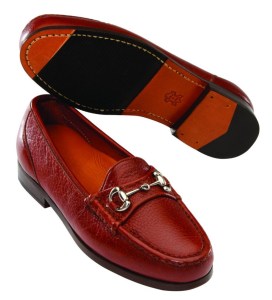
Visit our sale page and view the LaSalle above and many more at great Savings!
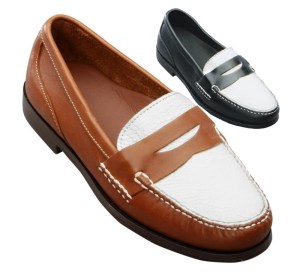

The year? 1945. The place? Ocean Drive in Myrtle Beach, SC. An old beach house has withstood the test of Hurricane Hazel and been converted into a beer joint. Teenagers pack in from one wall to the other on a hard-packed dirt floor. There is a jukebox playing Rhythm & Blues and cold beer is being passed through a hole in a nearby wall. This place was known as “The Pad!” It was slowly upgraded to have wood plank floors and low ceilings. It definitely had the makings of a good Rhythm & Blues club!
“The Pad” would become known as a fortress for “SHAG” to teens in Myrtle Beach, SC…
What is “Shag” you ask? It’s a phenomenal dance craze that started in Myrtle Beach in the 40 and 50’s. Local teens invented the dance step that is most suited to Rhythm & Blues music. But “Shag” is much more than a style of swing dancing, it is a way of life for people from Virginia Beach to Florida! Some may even refer to it as a “religion.”
What is this dance that has gained so much attention?
It is a 6-count, basic pattern dance with East Coast Swing. There is a rearrangement of the footwork that makes it look and feel unique. All the action occurs below the waist, though instructors tend to teach a very standard basic pattern.
True seasoned “Shaggers” take pride in adopting their own versions of the dance, each being distinctive and smooth. Using the balls of their feet and small steps, “Shaggers” manage to perform this very “cool” style of dance to individual perfection!
Not only have the Carolina’s been famous for “Shag,” but they are also home to “Beach Music,” better known as Rhythm & Blues. But as “Shag” has evolved, so has the music. Now “Shaggers” enjoy performing their magic to everything from gospel to music from the big band era (known in the Carolina’s as “Smoothies.”)
This Myrtle Beach “pastime” has become much larger in nature with Shag Clubs popping up everywhere. All of the clubs are members of the Association of Carolina Shag Clubs. The “Shag” has even been declared the official dance of the state of South Carolina!
Today there are major events such as the Grand Nationals in Atlanta where “Shaggers” can show their stuff and compete against the best in the country. “Shag” has even spread internationally to London, Ontario, where it is a favorite for many.
“Shag” has become such a way of life to so many people that it is hard to imagine a time before “Beach Music” and pink shoes. We definitely haven’t seen the last of the heralded “Shagger” or the end of this growing phenomenon!

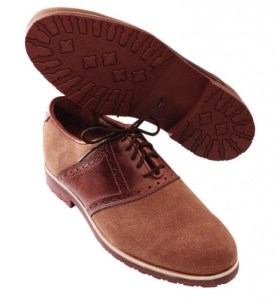
The David Saddle is a classic Balmoral saddle oxford tie. It features leather uppers, full leather lining, cushioned tongue, removable heel to toe cushioned foot bed and a cushioned blown rubber outsole.
Greystone Suede
Regular $169
SALE $79

Buffalo Jackson Bison Leather Driving Moccasin
Burnished Indian Tan Bison w/ Mahogany Bison trim. Leather and rubber driving outsole. Genuine Hand-sewn Construction. Cushioned leather insole.
Regular $179.00
SALE PRICE $99
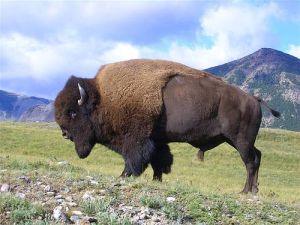
The great American Bison has been a provider of food, housing and clothing to North America’s inhabitants since the Ice Age 300,000 years ago.
Recent tanning innovations on Bison hides has led to new beautiful and unique leathers produced for garments, leather goods and to be sure, footwear! The Bison’s hide fibers are of a bundled nature compared with the parallel fibers found in that of the bovine’s. This unique structure helps footwear to retain its original factory produced shape from one wearing to the next. Footwear will mold to the wearer’s foot and shrink back when put in the closet.
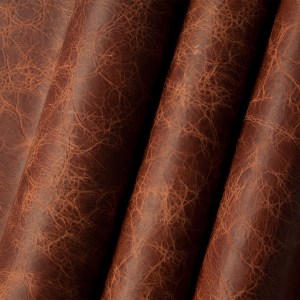
Imagine, the Bison thrives in climates reaching -50 degrees F in the Dakotas to Arizona where temps can surpass 110 degrees F. The uniqueness of the animal’s hide fiber structure can be directly attributed to this amazing adaptability to varying climates.
The fact that North America’s Bison herds have been increasing at a steady 5% annual rate is certainly heartening – as at the end of the 19th century the total estimated population dropped to a scant 300 head – down from over 10,000,000 a mere 100 years prior. Today the best estimate is over 350,000 head exist in North America. To think that if it had not been for Teddy Roosevelt’s direction to halt the wasteful slaughter/leavening the dead animals out on the prairies for only the vultures , we indeed came close to causing the extinction of the magnificent creature. A creature that can run 40 mph, out maneuver a horse and can jump 6 feet in the air from a standing position!

Why Bison? Besides the fact Bison is”America’s Original Leather”, its blessed hide structure is the best possible for all types of finished leather products – especially for footwear!
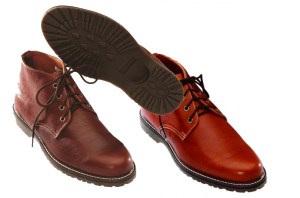
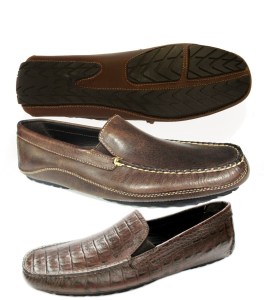
Cortez is perfect dressed up for the office or dressed down with jeans for the weekend. This genuine handsewn driving moccasin features a leather lined forepart on rubber driving outsole.
Leather and Rubber Driving Outsole
167-05 Old Briar Waxy
167-07 Brown Croco Leather
REGULAR PRICE $145
SALE PRICE $79

What’s Inside a Shoe?
Have you ever wondered what makes a shoe and what all the terms a manufacturer or cobbler use mean? I found this helpful terminology article that the blogger Old Shoe Leather put together as very helpful in understanding all that goes in making a pair of shoes.
Next time you receive a new pair of David Spencer or Buffalo Jackson shoes pull out this guide and take a walkthrough your new pair. A little knowledge goes a long way!
Terminology
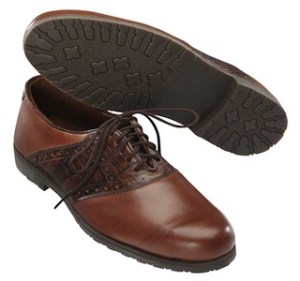
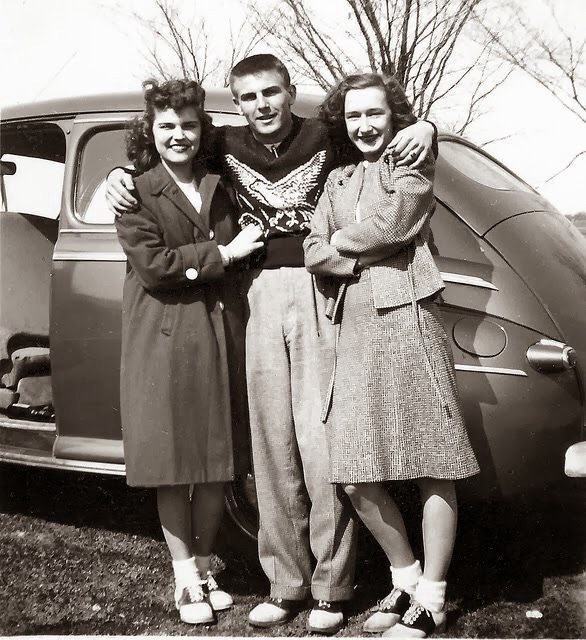
The History of the Saddle Oxford.
As best we can determine, the “saddle oxford” or “saddle shoe” was first introduced by the Spalding Company in 1906. The original version was used for women’s gym classes. 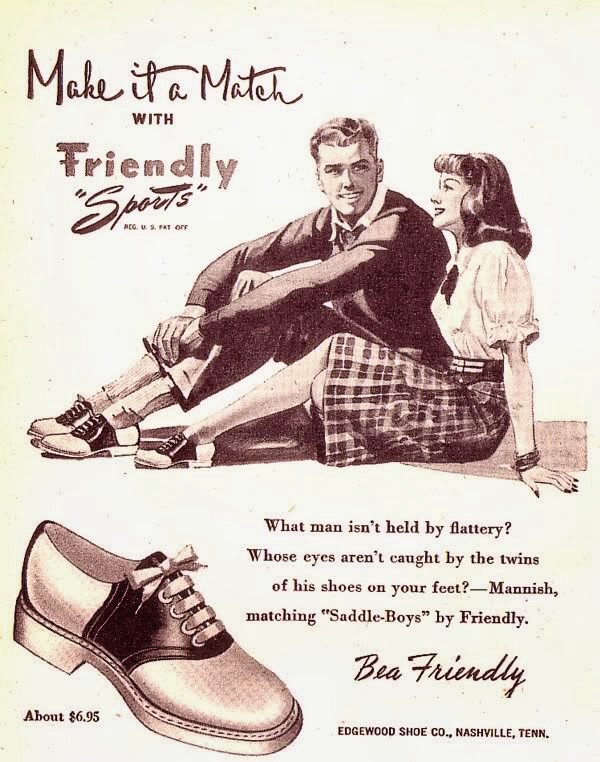 It had soft white leather and a black leather mid panel (shaped somewhat like a horse’s saddle). It also had a matching black leather stripe that ran down the back of the shoe. The originals were made with white leather soles. The contrasting saddle itself was decorative and sporty but also was engineered to provide support for the arch and instep. Soon the shoe was being built with a red rubber sole for greater cushion and comfort and being used for a variety of sports and activities such as cheerleading, tennis and golf. When the Lindy Hop/Jitterbug craze came into popularity it became the shoe of choice for dancers and soon crossed over to the boys and worn with chino’s, denim and dress clothing.
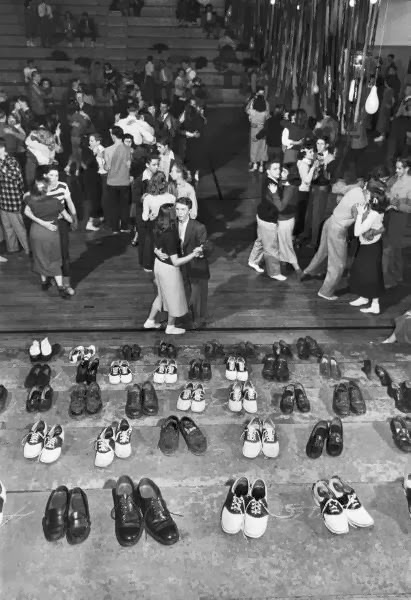
Modern versions can be hard to find but with some searching can come in every possible material and color combination and might again become the shoe of choice for the well-dressed “preppy”
A reflection of talent
Classic | Updated | Comfortable
Classic | Updated | Comfortable
Classic | Updated | Comfortable
Since 2007
 The Cortez
 David Spencer Casual Footwear